Plywood Manufacturing Plant Cost: Machinery Prices, Setup Investment & Manufacturers
Setting up a plywood manufacturing plant is a bigger decision than simply buying a few machines and finding a production space.
The investment can vary considerably depending on the type of plywood, production capacity, level of automation, raw materials and the machinery selected. For a new manufacturer, understanding these factors before approaching plywood machine manufacturers can prevent expensive changes later.
The first step is not asking, “How much does a plywood plant cost?”
It is asking, “What kind of plywood plant do I actually want to build?”
What Determines Plywood Plant Cost?
There isn't one standard investment figure that applies to every plywood unit.
A small production facility and a large automated plant can have very different requirements.
Some of the major cost factors include:
- Land and factory infrastructure
- Log storage and handling
- Veneer production equipment
- Drying systems
- Glue mixing and application
- Hot and cold pressing
- Panel trimming and sanding
- Electrical installation
- Labour and material handling
- Safety and environmental requirements
- Packaging and storage
Production capacity also has a direct effect on the machinery required.
Machinery Used in Plywood Manufacturing
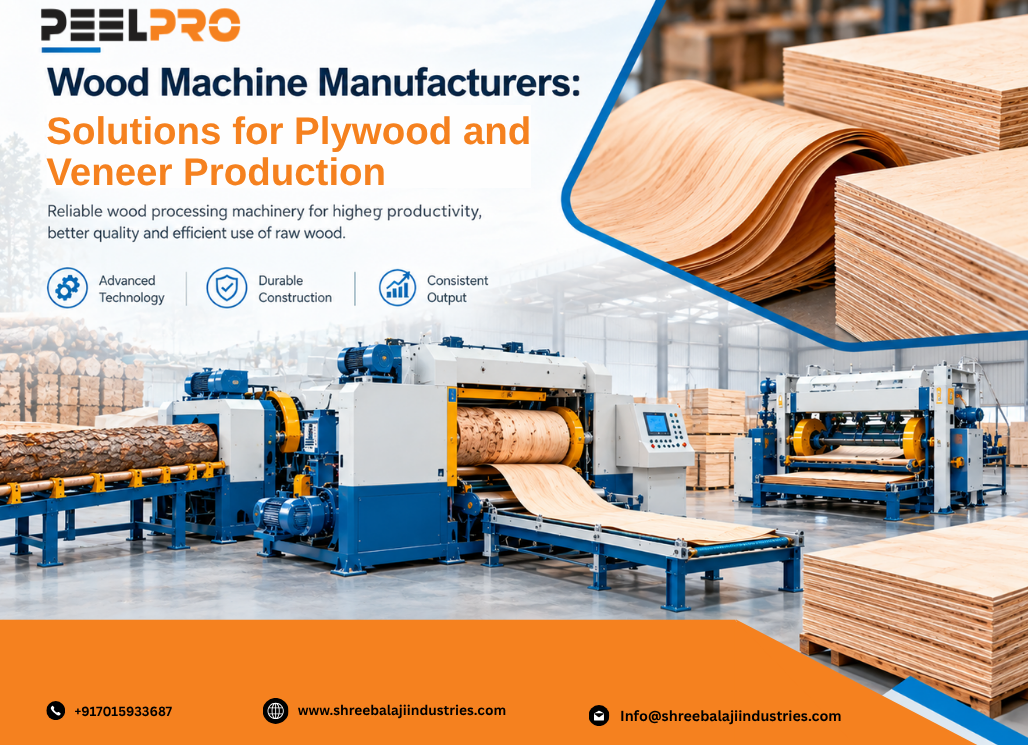
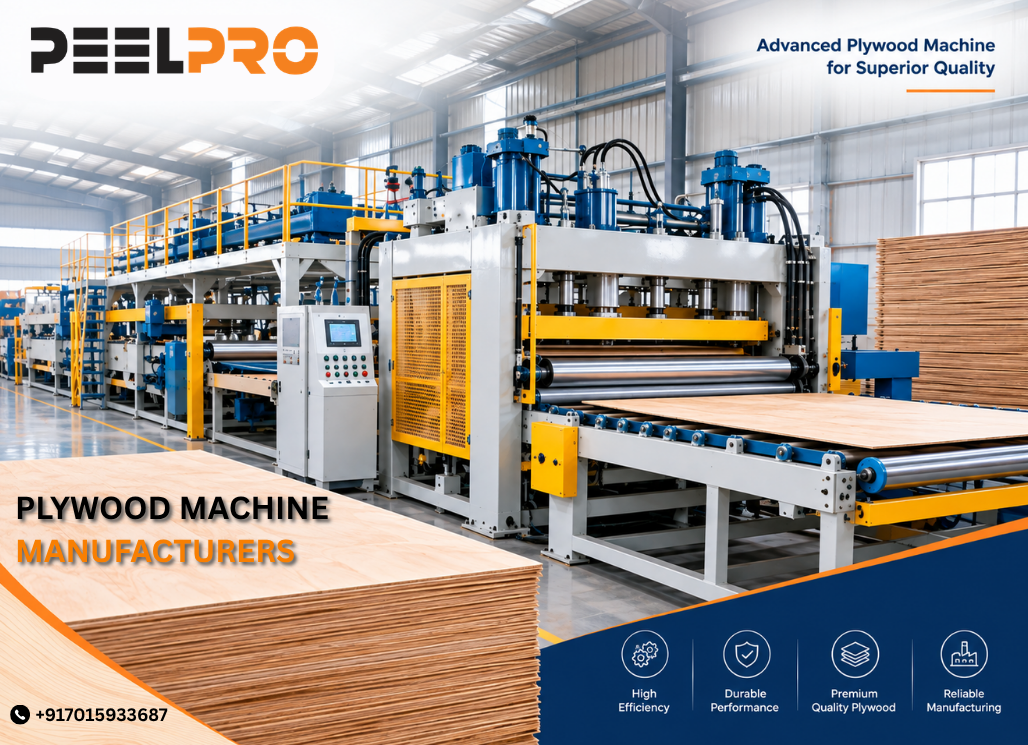
A plywood plant normally involves several stages rather than one standalone machine.
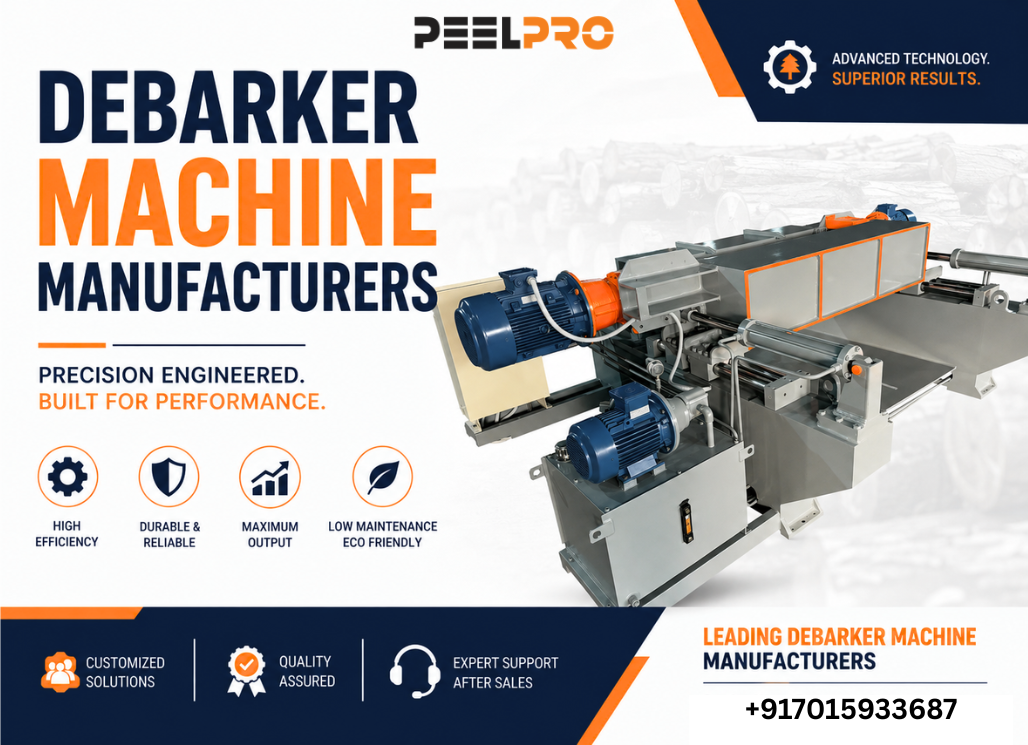
The exact configuration depends on the manufacturing process, but the production line may include equipment for:
Log preparation → veneer peeling → veneer drying → glue application → assembling → pressing → trimming → sanding → finishing
Each stage has a role.
For instance, veneer quality affects the appearance and consistency of the finished board. Pressing conditions influence bonding, while sanding and finishing determine the final surface.
That is why selecting individual machines without considering the complete production flow can create problems later.
Typical Machinery Investment Areas
Instead of looking at one total machine price, divide the investment into sections.
|
Plant Section |
Main Purpose |
Cost Consideration |
|
Log preparation |
Prepare timber for veneer production |
Equipment + handling |
|
Veneer production |
Produce veneer sheets |
Machine capacity and automation |
|
Veneer drying |
Reduce moisture to required levels |
Energy and system design |
|
Glue application |
Apply adhesive consistently |
Production speed |
|
Pressing |
Bond veneer layers |
Press size and capacity |
|
Trimming |
Cut panels to required dimensions |
Automation and accuracy |
|
Sanding |
Smooth panel surfaces |
Finishing requirements |
|
Material handling |
Move logs, veneer and boards |
Labour and workflow |
The actual price needs to be obtained from manufacturers based on the required specifications.
Don't Compare Machine Prices Without Comparing Specifications
Two machines can have very different prices while appearing to perform the same basic function.
Before comparing quotations, check:
- Production capacity
- Working dimensions
- Power consumption
- Automation level
- Required operators
- Construction and components
- Installation requirements
- Maintenance needs
- Spare parts availability
- Warranty and technical support
A cheaper machine isn't necessarily cheaper to operate over several years.
Similarly, buying the most expensive equipment doesn't automatically guarantee better production.
The machine should match the plant's actual workload.
A Practical Example of Capacity Planning
Imagine a manufacturer planning to produce plywood panels for regional distributors.
If the expected order volume is moderate, investing immediately in a highly automated large-scale line may put unnecessary pressure on the initial budget.
But if the business already has strong distribution channels and expects production to increase, choosing equipment with limited capacity could create another problem within a short period.
This is why future production should be part of today's machinery discussion.
What Should You Ask Plywood Machine Manufacturers?
A machinery supplier should be able to discuss more than the catalogue price.
Ask for information about:
- Recommended plant layout
- Machine specifications
- Expected production capacity
- Power requirements
- Installation procedure
- Operator requirements
- Maintenance schedule
- Spare parts
- Warranty
- After-sales technical support
It is also sensible to understand what is included in the quotation.
Installation, transportation, electrical work and auxiliary equipment may not always be included in the headline machinery price.
Quick Checklist Before Investing
- Decide plywood type and specifications
- Estimate expected daily production
- Finalise available factory space
- Identify raw material requirements
- Plan the complete production flow
- Compare machinery specifications
- Calculate power requirements
- Check installation needs
- Ask about spare parts and service
- Keep room for future expansion
Why the Right Manufacturer Matters
Machinery became part of the production system for years.
If technical support is difficult to access, even a small mechanical issue can interrupt production. Reliable communication, availability of replacement parts and proper installation support therefore deserve as much attention as the initial price.
Shree Balaji Industries operates in the machinery segment and can be approached for discussions around industrial equipment requirements. When evaluating machinery, buyers should share their production target, panel specifications, available space and expected operating conditions so the equipment can be assessed according to the actual application.
Build the Plant Around the Business
The cost of a plywood manufacturing plant should be treated as a complete project rather than a machine purchase.
Land, infrastructure, machinery, utilities, labour, raw materials and maintenance all contribute to the eventual investment. A well-planned setup can also make future expansion easier.
If you're comparing plywood machine manufacturers, start with your production requirement and then request detailed quotations based on the same specifications. That makes price comparisons much more meaningful.
For industrial machinery requirements, you can connect with Shree Balaji Industries.